5 Grounding Exercises That Help Me Calm My Mind And Ease Anxiety
Today, I am sharing 5 grounding exercises with you that I use to help me calm my mind, reduce stress and anxiety, and reconnect with the present moment. These 5 grounding exercises are simple, accessible, and easy to practice anytime, anywhere.
Table of Contents
Disclaimer: Before we begin, please note that I am not a counsellor or mental health professional. What I share here is based on my personal experience, and what has worked for me may not work for everyone. This is my truth, and I believe that everyone’s truth and healing journey looks different. That said, I deeply believe in the power of sharing our stories. If anything you read here helps you feel a little lighter, offers a new perspective, or gently supports you where you are right now, then that truly matters to me.
Anxiety is something I have been dealing with for pretty much all my life. It has always been part of me, and to be completely honest with you, even though my anxiety attacks became much less frequent in the past years, I don’t think anxiety will ever leave me for good.
Don’t get me wrong, I don’t mean to be negative here, but I am a bit of an overthinker by nature, which always allows room for anxiety to creep in.
But over the years, I have learned to work with my anxiety more consciously, and I have built a foundation for myself that helps to keep me more rooted and grounded in my daily life.
In addition to this, I use certain mindfulness and grounding techniques to support me whenever anxiety arises.
Whether it is the weight of a stressful day or an unstable sense of unease, anxiety has a way of creeping in, and for these moments, it is good to have a few tools on hand that can help give you some grounding when you most need it.
Grounding exercises are powerful tools to help gently anchor your mind back in the present moment, allowing you to breathe a little easier and feel a little lighter.
Today, I am sharing 5 grounding exercises that support me whenever anxiety creeps in. These accessible grounding exercises can help soothe your mind, restore balance, and bring you back to the present moment.
>>> Pin or save for later <<<
Key benefits of grounding exercises at a glance
Anxiety shows up differently for everyone. Examples include racing thoughts, a tight chest, rapid breathing, feeling on edge, biting your nails, or nervously scratching your skin etc.
For me, rapid breathing and nervously scratching my skin are my signs that anxiety is close.
Grounding for anxiety attacks offers a way to step out of that whirlwind and gently bring yourself back into the present moment.
The benefits of grounding exercises are as follows:
- promote physical relaxation
- calm the nervous system
- create a sense of emotional balance
- promotes mindfulness
- encourages being more present
In essence, grounding techniques bring you back from the extremes of anxiety and into the reality of now, helping you pause, take a breath, and begin again.

5 Grounding exercises and mindfulness techniques that can change your life
Below are my 5 go-to grounding exercises and tools I have leaned on during anxious moments and continue to use in my daily life to help me feel calmer, more centred, and present.
Some of these mindfulness and grounding techniques have become daily rituals, helping me feel more rooted overall, but more on that later.
My tip for you: As mentioned, anxiety affects everyone differently; hence, I suggest you take a look at all the grounding techniques below and then pick the ones that resonate most with you and give them a try to find out what they can do for you.
What I have learned over the past few years is that when it comes to dealing with anxiety, it is truly a learning-by-doing process. Consistency and patience are key throughout the process!
1. Breathwork: for grounding and anxiety relief
Learning how to breathe consciously changed everything for me!
I came to breathwork via yoga. Yoga starts with the breath, and the breath is a super powerful tool that can help ground you and bring you back to the present moment almost instantly.
Conscious breathing soothes the nervous system, and over time, the mind becomes clear and free from any distracting thoughts, allowing you to create a sense of ease, inner balance and calmness from deep within.
By directing your attention to the rhythmic flow of your breath, you can shift your energy within seconds. Give it a try, it really works!
The following exercise is called the 4-fold breath. Give yourself 5 – 10 minutes without distraction and try this breathing and grounding exercise to feel the effects first-hand.
4-Fold-Breath
- come to a comfortable seat
- close your eyes and connect with your breath (breathing in and out through the nose)
- notice how your breath travels in and out of your body
- when you feel ready, slowly move into the 4-fold breath
- inhale to the count of 4
- hold your breath to the count of 4
- exhale to the count of 4
- hold your exhale to the count of 4
- repeat as many times as it feels comfortable for you
- once you finish your breathwork exercise, sit for a few moments in silence, feeling the effects
Conscious breathing activates the parasympathetic nervous system, helping the muscles relax. The oxygen boost and muscle relaxation help to bring back a sense of control, clarity, and a grounded, centred state of being.
Learning how to use my breath and how to work with my breath completely transformed my anxiety. Knowing that I have this tool available to support me whenever I feel anxiety crawling up gave me the strength and courage to work with my anxiety in a much more conscious way.
Instead of letting anxiety take over my body and thoughts, I found a way to calm my mind, ease my nerves and take me back to the present moment.
Any emotions that might be arising with the anxiety wave, I no longer push away or let take over my body.
Breathwork helped me to allow space for these emotions to be, and with space comes a feeling of ease and acceptance, which, over time, helps to release and let go of these arising emotions. You learn to work through the emotions instead of against them.

2. Connecting with nature: a powerful grounding technique
Leading these city lives, we tend to forget that we are nature, and going back to nature can be a super grounding experience on so many different levels.
Reconnecting with nature is a sensory experience that activates and involves all your senses.
- see – appreciate all the beauty that surrounds you, trees, flowers, etc.
- hear – be open to all the noises along the way, birds, wind, etc.
- smell – pay attention to the smell around you, grass, earth, etc.
- feel – hug a tree, feel the grass, pick up a stone and hold it in your hand, etc.
- taste – imagine the different flavours of nature, maybe feel that earthy taste in your mouth, etc.
By engaging in activities like walking, hiking, or simply spending time in a park, you get the chance to step away from the hustle and bustle of daily life, restore a sense of balance within, and recharge your batteries at the same time.
In addition to this, nature has a lot of therapeutic benefits, such as e.g. reduced stress levels, improved mood, sharpened attention and focus, and contributes to better holistic well-being physically and mentally.
By fostering a profound appreciation for the natural world around us, you can cultivate a deeper bond with your origin and open yourself up to a deeper and more connected understanding of life.
Whenever I feel on edge, which for me is another sign that an anxiety attack might be arising, I head out for a walk in the forest or a walk along the beach. When I feel overwhelmed with racing thoughts, the forest is my go-to. When I feel lost and uninspired, you can find me walking along the beach.
Again, find what is right for you and allow nature to help you relax and recharge from life.
3. Mindful meditation: A grounding technique for calm and clarity
Meditation is something I have always felt drawn to, but I have to admit that it took me a bit of time to get into meditation.
Sitting still has never been my strength, but my daily meditation practice has totally changed my life and made a huge difference to my anxieties overall.
Meditation is a wonderful way to support muscle relaxation and destress from daily life. In addition to this, meditation helps you detach from distracting thoughts, which helps to promote mental clarity and a sense of emotional balance.
If you are curious about meditation but unsure how to start, there are a lot of free resources out there that you can access at any time. Insight Timer, Calm, Headspace and of course, YouTube offer a lot of free resources.
If meditation feels overwhelming to you, this might help you ease into it:
- pick a voice that you trust
- pick a meditation style that resonates with you (guided meditation, body scan, etc.)
- make yourself comfortable and create a relaxing environment for yourself
- allow yourself time to ease into meditation in general
My tip for you: From my experience, guided meditations are a great way to start. I recommend trying the Love and Kindness Meditation and this Body Scan Meditation to begin with.
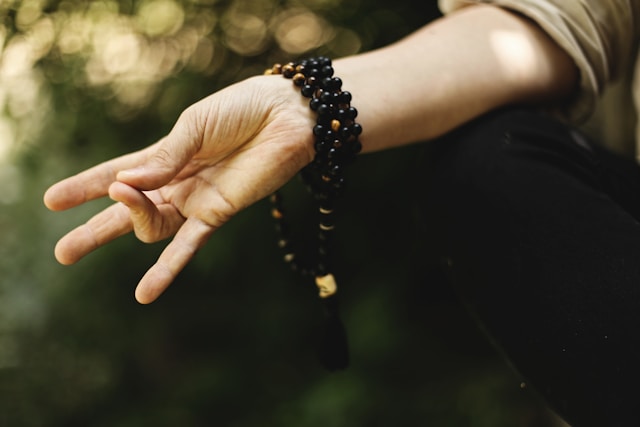
4. Yoga: grounding body and mind
As a certified yoga teacher, I could easily write a 10-page love letter to yoga. Like meditation, having a regular yoga practice has radically transformed my life.
Yoga is a deeply powerful mindfulness and grounding technique that helps calm both body and mind.
Through intentional movement and breath, yoga helps you release built-up tension and create space within. As your body opens, energy begins to flow more freely, letting go of stagnant emotions, anxiety, and stress held in the muscles.
And remember what we said earlier about the breath? Yoga starts with breath. By linking breath to movement, you cultivate awareness, anchor into the present moment, and shift your focus away from distracting thoughts. This connection fosters clarity, introspection, and a deep sense of inner calm.
If you are ready to give yoga a try, join me for this beginner-friendly yoga flow filmed in the magical jungle of Costa Rica.
If you enjoyed this yoga flow and are considering starting yoga, check out my blog post Start a Home Yoga Practice Today – 7 Proven Hacks From A Yoga Teacher. In addition to this, you can find lots of free and on-demand yoga flows with me on YOUTUBEYOGATX!
5. Mindful creativity for emotional release
Yes, let’s get creative, my friends! Engaging in creative endeavour is a powerful mindfulness and grounding activity that encourages you to connect with your inner world playfully.
Through artistic expression, such as painting, writing, pottery, knitting, crafting, baking, etc., you take yourself out of the busy hustle and bustle of daily life and enter a state of flow that brings you back to the present moment.
Doing something creative is a form of self-expression and enables individuals to cultivate a sense of accomplishment and self-confidence, creating joy and a renewed sense of purpose.
Whether through the use of colours, words, or textures, the creative process can serve as a therapeutic outlet for emotional catharsis and introspection, fostering a profound sense of grounding that nurtures the mind, body, and soul at the same time.
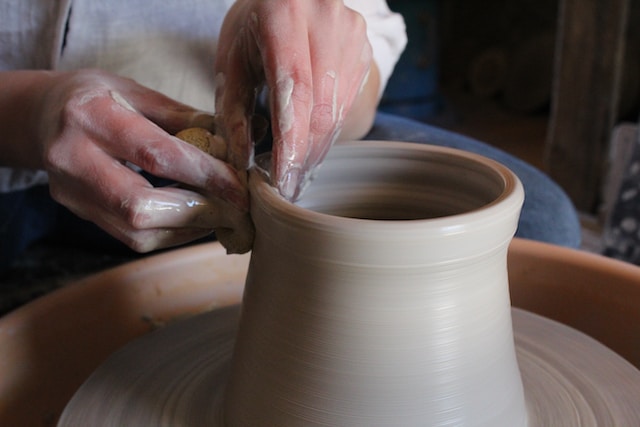
Before we head to the next point, there is one more grounding activity that you might enjoy: journaling. If journaling is your cup of tea, I recommend you check out my blog post on How To Start Journaling, specifically the part about Journaling For Anxiety.
3 Simple Ways to Practice Grounding Exercises Every Day
Grounding for anxiety attacks is possible, but what I have learned over the years of dealing with anxiety, integrating grounding exercises into your daily life will allow you to build a stronger foundation for yourself, helping you to stay more balanced and calm as you go through life, leaving less room for anxiety to creep up on you.
For example, morning yoga stretches can help you set a peaceful tone for the day, while evening meditation can help you unwind and relax before bed.
And no, these mindfulness and grounding techniques don’t need much time either.
I get it, my friends, we all have busy schedules, but already 5 – 10 minutes every day can make a HUGE difference to your daily life and mental well-being.
Below are three tips on how you can incorporate grounding exercises into your daily life:
- Combine grounding exercises with daily habits – for example, practice deep breathing, yoga or meditation while you wait for your morning coffee to be ready, take your lunchtime walk in the park to reconnect with nature, etc.
- Use grounding techniques as a transition tool – for example, do a body scan meditation to help you unwind and relax before you go to bed
- Use grounding exercises when you feel stressed – be aware when you are stressed and in moments of stress, use the fourfold breath, take a break and go for a walk in nature, step on your yoga mat and do a few stretches, etc.
When I started to get more into grounding exercises, I went all in and implemented a morning as well as an evening routine with mindfulness and grounding techniques that I knew felt good in my body and helped to ease my mind.
Today, my morning routine consists of meditation, yoga and journaling, and my evening routine is all about sensual experiences using aromatherapy, no screen time, drinking my hot lemon water and enjoying my daily skincare night routine before going to bed.
Pick the grounding exercises that resonate most with you and begin to implement them into your daily habits. Over time, they will become part of your daily habits and routines without you even noticing it.
But I also have to say that consistency is key. Every time I get sloppy with my healthy routines, I fall back into old habits, and anxiety is more likely to creep up on me.
Hence, my recommendation to you is to find what works for you, make it yours and be consistent with your grounding exercises. The real magic happens when you commit to these practices long-term.
And keep in mind that you are doing this for yourself and your well-being first and foremost! So stick with it and give yourself a chance, even if it takes a while for things to change.
Yes, consistency is one thing, patience is the other. These grounding exercises may take time and practice before they show all their benefits. But hang in there, my friends, you got this!
With time and consistent practice, grounding exercises can become powerful tools to support your mental and emotional well-being long-term.
In case there are any questions about these mindfulness and grounding techniques, feel free to leave me a comment below. I always love hearing from you, and I will make sure to get back to you!
Feeling called to go deeper? Explore my blog post How to Start Journaling – The Ultimate Beginner’s Guide, featuring a special section on journaling for anxiety to help you calm your mind, process emotions, and feel more grounded.
Sign up for my newsletter and get all my wellness tips, yoga tips and personal growth inspiration sent straight to your inbox. I am a certified Personal Trainer and Yoga teacher inspired by this journey of personal growth and self-discovery, and I love to share all my learnings along the way. Join our online community today – see you on the inside!
Stay wild,
Nicolle
Featured image: Photo by Nadia Jamnik on Unsplash

Hi, I’m Nicolle, a certified Personal Trainer, Yoga Teacher, and Blogger. I’m the founder of Let Your Shadow Shine and the voice behind this blog — your space for fitness, well-being, and self-discovery. On this blog, you will find empowering movement practices, holistic well-being tips and personal growth inspiration, all helping you to live with intention and create a life aligned with your inner truth.





Great post, I am always looking for ways to be more present and calmer. Wonderful life skills.
Yes, so important to have a strong foundation. Thanks so much for reading!
Thank you so much for sharing these helpful mindfulness and grounding techniques. I’m a huge fan of connecting with nature to calm my mind, but I’m excited to try yoga as well.
This is such a helpful post. I love how simple and practical these grounding exercises are — easy to remember and actually doable in everyday life. Thank you for sharing something so honest and supportive!
Thank you for reading. Glad to hear that you found these grounding exercises helpful and supportive.
These are great practical techniques to help mindfulness, very easy to do in your everyday life.
Thanks so much Alana for stopping by and leaving a comment. Really happy to hear you enjoyed these grounding exercises.